

No alternative to awareness in preventing kidney disease: Speakers
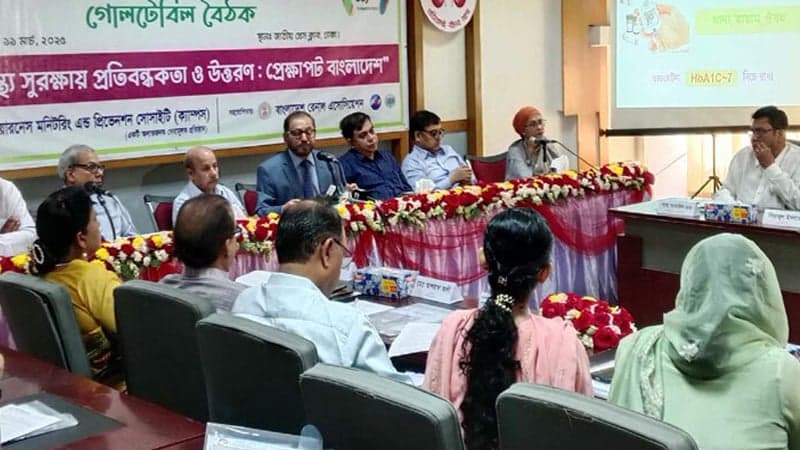

Kidney disease is becoming more prevalent worldwide, including in Bangladesh, where the rising cases are a growing concern. This illness not only affects individuals but also places a heavy financial strain on families, society, and the nation. The severe impact of kidney disease, coupled with expensive treatment costs, makes healthcare inaccessible for many, resulting in a high number of untreated fatalities. However, raising awareness and undergoing regular health check-ups can significantly reduce the risk of kidney disease.
These insights were shared by speakers during a roundtable discussion titled "Barriers and Solutions for Kidney Health Protection: The Context of Bangladesh," held at the National Press Club on Tuesday (March 11).
As part of the World Kidney Day 2025 activities, the Kidney Awareness Monitoring and Prevention Society (KAMPS)—a leading NGO focused on kidney health in Bangladesh—organized the discussion, with support from the Bangladesh Renal Association.
Professor Dr. M A Samad, the founder and president of KAMPS, presented the keynote speech. In his presentation, he said, "According to the World Health Organization, kidney disease is one of the leading causes of death worldwide. The prevalence of kidney disease is increasing in both developed and developing countries, primarily due to non-communicable diseases such as diabetes, high blood pressure, and obesity. Globally, around 85 crore people suffer from chronic kidney disease. This number is nearly twice that of diabetes patients and about 20 times higher than cancer patients."
"The rising prevalence of kidney disease in Bangladesh is alarming. According to data, approximately 38 million people in the country are affected by some form of kidney disease, with around 40,000 patients requiring dialysis each year. The disease is spreading at an equal rate in both urban and rural areas," he added.
Professor Dr. Harun-Ur-Rashid, President of the Kidney Foundation, described kidney disease as a 'silent disaster.' He said, "Diabetes is increasing in our country compared to other nations. In 2006, the percentage of diabetes patients was 6%, but now it has risen to 11%. Shockingly, 50 to 55% of patients do not even know they have diabetes. Diabetes is one of the major causes of kidney disease."
Professor Dr. Mohammad Rafiqul Alam emphasized the need for strong preventive measures against kidney disease. He said, "A well-structured action plan must be developed. Special attention should be given to ensuring that children and young people do not develop kidney disease. We must take action now."
Sports personality Gazi Ashraf Hossain highlighted the importance of physical activity in preventing kidney disease. He said, "To protect children and young people from kidney disease, regular sports, walking, and exercise should be encouraged. Strict measures must be taken to reduce the consumption of fast food and junk food while eliminating laziness."
Professor Dr. Md Nazrul Islam, President of the Bangladesh Renal Association, stated, "The number of kidney patients in Bangladesh has been steadily rising. Over the past decade, cases have increased from 15 million to 35 million. However, there is hope as dialysis centers are being set up at the district level, improving access to treatment. The biggest challenge for kidney transplants remains the shortage of donors, though the existing transplant law is currently under review for necessary amendments."
Professor Dr. Afroza Begum, President of the Pediatric Nephrology Society of Bangladesh, stressed the importance of early prevention in children. She said, "Many kidney diseases in children can be prevented. If a premature baby is born, they must be kept under regular follow-up. Most children with kidney problems suffer from urinary infections. If treated early, the risk of kidney failure can be reduced."
Dr. Farhad Hossain Chowdhury, Member Secretary of the Bangladesh Renal Association, said, "Our main goal is to provide proper treatment for kidney patients. Currently, there are two treatment options: dialysis and kidney transplant. The government has plans to establish dialysis centers in 44 district hospitals. However, there is a shortage of trained doctors and nurses. Specially trained nurses are essential for effective treatment."
The roundtable discussion was attended by government policymakers, doctors, journalists, artists, educators, and other professionals.
Leave A Comment
You need login first to leave a comment