
‘No More Silence’ exposes those accused of harassing women online
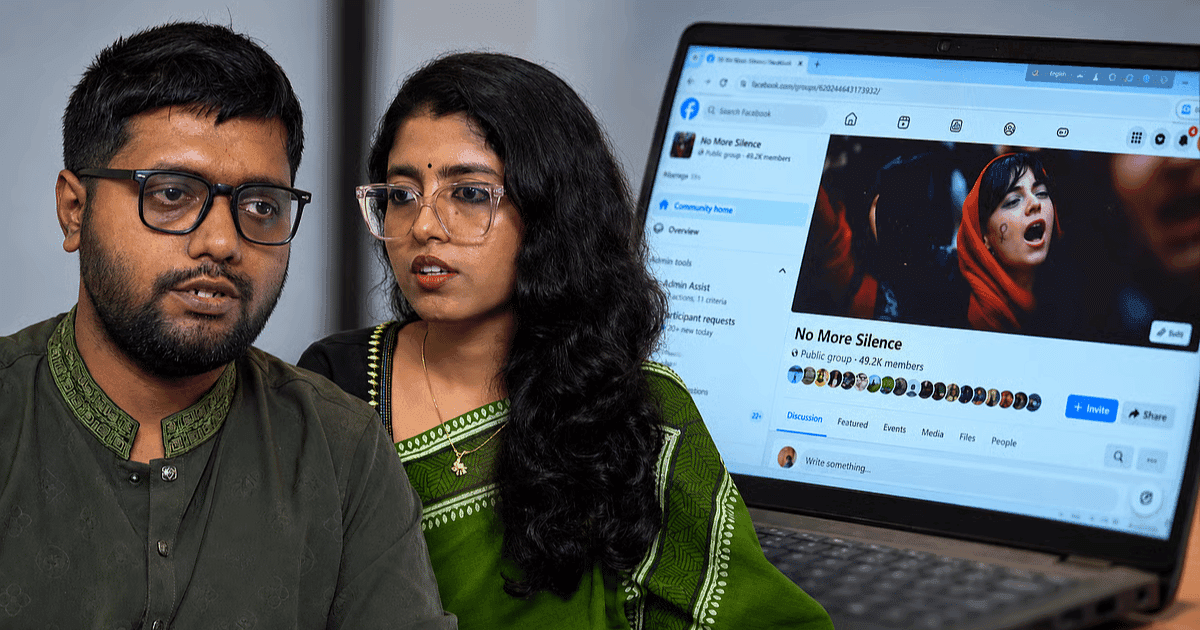

A Facebook group called “No More Silence” has emerged as a vocal opponent of obscene and sexually abusive comments targeting women on social media. The group publishes photographs, identities and links to Facebook profiles of people accused of posting offensive remarks about women in response to high-profile incidents and news reports. It claims to have exposed the identities of more than 100 individuals so far. In some cases, it has also sent screenshots of the comments to the individuals’ employers and educational institutions in an effort to prompt action.
Launched on November 2 last year, the group now has around 36,000 members. Its founder is writer and online activist Abir Ahmed Pias, who says its aim is to bring public attention to people who undermine others’ dignity through insulting and hateful online comments. Freedom of expression, he argues, must go hand in hand with responsibility for the dignity and safety of others.
An incident involving the sexual harassment of women at a concert in Habiganj helped inspire the group’s formation. The concert was held at Jalal Stadium to mark the silver jubilee of Brindaban Government College. After reports emerged of women being harassed at the event, a man posted an obscene comment about the incident on social media. Many users responded with laughing reactions.
The comment angered Pias and two associates. They felt that accountability was needed not only for the harassment of women but also for online behaviour that mocked or celebrated such abuse. That conviction led to the creation of No More Silence.
One of the group’s two moderators is Umme Suraiya Sumi, an entrepreneur involved in the clothing industry who holds a master’s degree in political science. The other moderator, Zakia Hossain, is a second-year higher-secondary student.
After the Habiganj incident, the group published information identifying the Facebook account from which the comment had been posted. The account subsequently claimed that the phone had been lost and the account hacked, with someone else responsible for the comment. It reportedly apologised and said it had submitted written explanations and undertakings to the officer-in-charge of Habiganj Sadar Model Police Station and the concert organisers.
The group has continued to publish screenshots of obscene comments targeting women beneath posts about news reports and widely discussed incidents. On September 30, it published photographs and identities of six people accused of posting offensive comments under a report about a woman whose body was recovered from a hotel toilet in Cox’s Bazar.
It also identified five people accused of making comments in support of rape beneath a report published on January 15 about an alleged gang rape of a passenger on a bus in Savar.
According to the group, some of those whose identities were exposed have been reprimanded by their employers or educational institutions. In one case, a man posted a photograph of his daughter from the beginning of her college years on Facebook, where it attracted obscene comments. The group published one of the comments, which subsequently circulated widely. The man later deactivated his Facebook account, the group claims. It also says it gathered information about his workplace and educational institution and sent screenshots of the comment to the relevant authorities.
In another case, the group posted allegations against a young man from Faridpur who was accused of making a video depicting inappropriate behaviour towards his sister. The group claims that police later detained him. He subsequently apologised on Facebook and pledged not to make similar videos in the future.
No More Silence is seeking to bring online harassment of women into public view and hold those responsible to account. However, allegations published by the group, information used to identify individuals and claims about law enforcement action require independent verification. Ensuring accountability must also involve care to distinguish substantiated evidence from allegations and to avoid exposing innocent people to harassment or mistaken identification.
Leave A Comment