
Over 113 shrines attacked nationwide in 16 months amid religious tensions
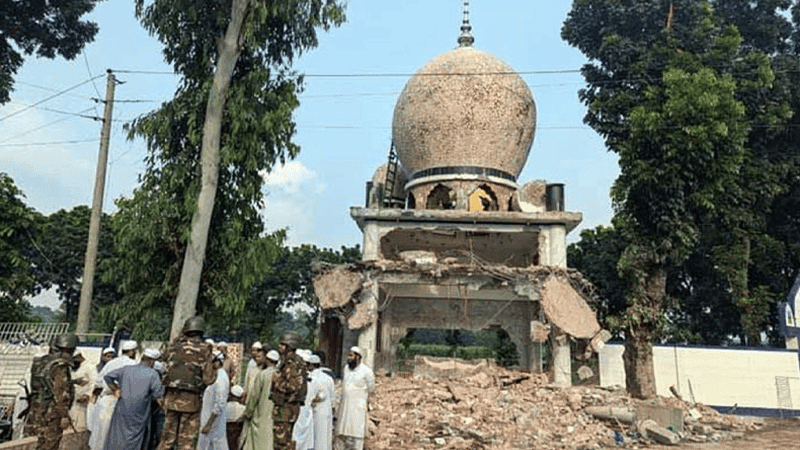

At least 113 shrines, dargahs and associated religious sites across Bangladesh have been attacked, vandalised or set on fire in the past 16 months, according to a research by RASA Center and MAQAM.
The organisation said that most of the incidents took place in the Dhaka division, followed by Chattogram.
According to MAQAM, 37 attacks were reported in nine districts of Dhaka division, with Narsingdi witnessing the highest number. Incidents also took place in Dhaka city, Narayanganj, Kishoreganj, Shariatpur, Manikganj, Gazipur, Rajbari, and Tangail. The attacks left at least 180 people injured, including women, and two dead.
In Chattogram division, 27 attacks were documented, including 17 in Cumilla, four in Chattogram, three in Noakhali, two in Brahmanbaria, and one in Cox’s Bazar, leaving 31 people injured.
Research reports indicate religious ideology clashes were the primary cause. Many shrines were targeted under allegations of “shirk” or heresy. Other contributing factors included social unrest, land disputes, and political vendettas. The studies also highlight administrative inaction in most cases.
The deadliest incident occurred on September 5 last year at the Nurul Paglar Dargah in Goalanda of Rajbari, where graves were desecrated and corpses set on fire, injuring more than 50 people and halting all shrine activities.
Police said legal action has been initiated and arrests made in several cases, though many investigations remain ongoing. RASA Center has filed a High Court petition seeking Tk 5.1 billion in damages for the attacks, with hearings underway.
Experts warn these attacks are not isolated, but reflect rising religious intolerance and exploitation of administrative weaknesses. Economist Anu Muhammad said the incidents—from shrine and mosque vandalism to disruption of cultural fairs—appear planned and systematic, often used by opportunistic groups for looting under the guise of ideology.
MAQAM coordinator Mohammad Abu Sayed noted that in Dhaka, Narsingdi, and Narayanganj, attacks were often carried out under the banner of “Tawhidi Janata,” targeting urs, fairs, and Sufi events. Perpetrators included Islamist factions, extremist groups, and some madrasa students.
Poet and thinker Farhad Mazhar condemned the attacks, calling them ideological fascism that undermines Bangladesh’s Islamic cultural diversity. He urged the government to ensure the security of shrine-related communities and take firm action against attackers.
Leave A Comment
You need login first to leave a comment