
Over 400 garment factories shut in 3 years: Commerce Minister
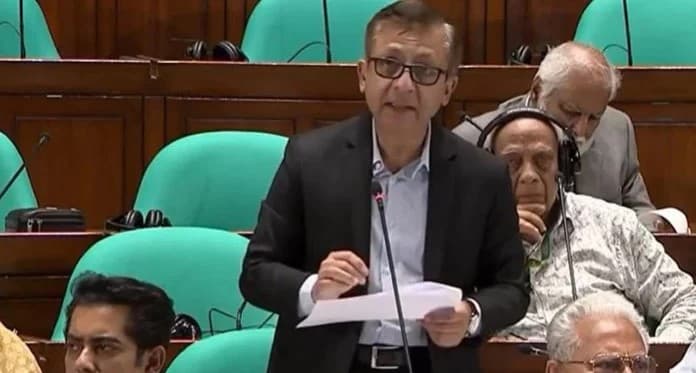

More than 400 garment factories have closed in the country over the three-year period from July 2023 to June 2026, Commerce Minister Khandaker Abdul Muktadir told parliament on Thursday, September 3. Among these, 282 were members of the Bangladesh Garment Manufacturers and Exporters Association (BGMEA) and 123 were members of the Bangladesh Knitwear Manufacturers and Exporters Association (BKMEA).
The minister disclosed the information in response to a question from Member of Parliament Md Ruhul Amin during the question-answer session of the 13th Parliament's third session, which was chaired by Speaker Hafiz Uddin Ahmad Bir Bikram.
The minister said the process of compiling a list of the closed factories is still ongoing.
He attributed the closures to the global Covid-19 pandemic, the Russia-Ukraine war, the Israel-Palestine conflict in the Middle East, the global economic downturn, domestic political instability, and a liquidity crisis in the banking sector caused by money laundering.
He also cited free-trade agreements between India and Vietnam with European countries, and foreign buyers' reluctance to place orders with small and medium-sized factories, as contributing factors to the factory closures.
Highlighting government measures to develop the garment sector, the commerce minister said the government is providing 1.50 percent alternative cash assistance to export-oriented textile industries instead of duty bond and duty drawback facilities. An additional 0.50 percent special incentive is also being given to textile exporters to the eurozone.
He also mentioned an additional 3 percent benefit for small and medium-sized industries under knit, woven and sweater sectors, and a 0.30 percent special cash incentive for the garment sector.
In response to another question on government market monitoring to control commodity prices, the commerce minister said regular market monitoring and surveillance activities are ongoing. District-level special task forces and the Directorate of National Consumers' Right Protection are conducting market drives nationwide.
Legal action, including fines, is being taken against overcharging, hoarding, artificial shortages, failure to display price lists and other irregularities, he said. The Bangladesh Competition Commission is also taking action against syndicates, cartels and collusive practices to ensure fair competition.
The minister said market monitoring, surveillance and legal actions would continue and be further strengthened as necessary to protect consumer interests and maintain stable commodity prices.
Leave A Comment