

Pahela Baishakh today
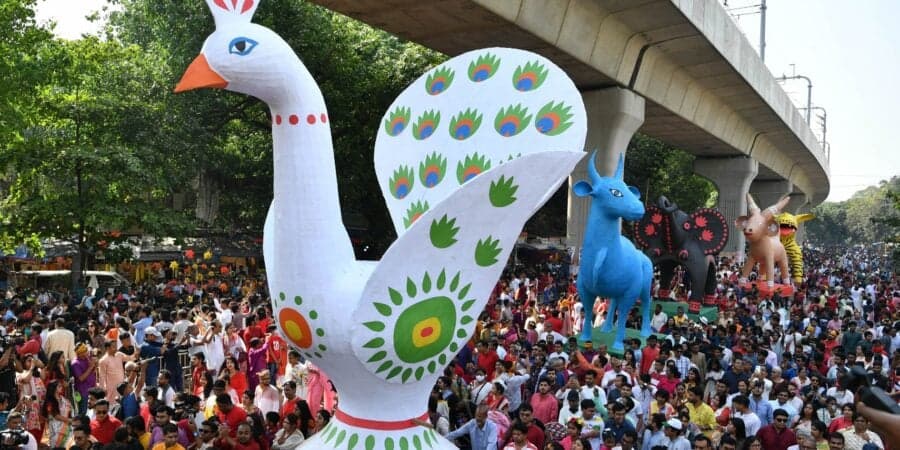

Today is Pahela Baishakh, April 14. With the crimson sunrise, the Bengali New Year 1433 has begun. Leaving behind all the fatigue, sorrow and decay of the old year, the Bengali nation has awakened with new dreams and vigour. The spirit of celebration now pervades from Ramna Botmool in the capital to every corner of the country. Leaving behind the inauspicious, the call of the new has brought the melody of unity to every home.
From dawn, Tagore's timeless song 'Eso he Baishakh, eso eso' has resonated from a hundred voices. Chhayanaut's traditional New Year programme began at Ramna Botmool as the morning light broke. The melody of flutes and collective music instils a new hope in the Bengali heart. From dawn, a tide of people has flowed into the Ramna area to immerse themselves in this stream of music.
With the break of dawn, the familiar colours of the festival have blossomed everywhere. People of all ages, adorned in red and white attire, have filled the streets and neighbourhoods, creating a vibrant spectacle. Ramna Botmool, the Faculty of Fine Arts at Dhaka University, and various other cultural venues have become a vast sea of humanity.
The roots of the Bengali New Year are deep. Its formal journey began as the 'Fasli San' (harvest year) in 1584 AD during the reign of Mughal Emperor Akbar for the convenience of tax collection. Today, it has become an inseparable part of Bengali identity.
Chhayanaut's programme at Ramna Botmool in 1967 gave this celebration a new dimension as a civic festival. Decades later, in 1989, the Mangal Shobhajatra (procession) began from Dhaka University's Faculty of Fine Arts, which has now gained global recognition. In 2016, UNESCO recognised the procession as an 'intangible cultural heritage of humanity', establishing its global status.
Pahela Baishakh is not just a festival; it is a powerful symbol of Bengali secular consciousness. People from all walks of life, regardless of religion or caste, unite on this day to share joy. The traditional panta-ilish (fermented rice with hilsa fish) feast, streets adorned with alpona (decorative patterns), and folk fairs – all make the day a celebration of Bengali identity.
While the rural 'Halkhata' (new ledger opening) tradition has changed somewhat over time, its appeal remains undiminished. In the current digital age, exchanging greetings on social media and celebrating through virtual platforms has further expanded this stream of joy.
Leave A Comment
You need login first to leave a comment