
Parliament's first session on March 12, who will preside?
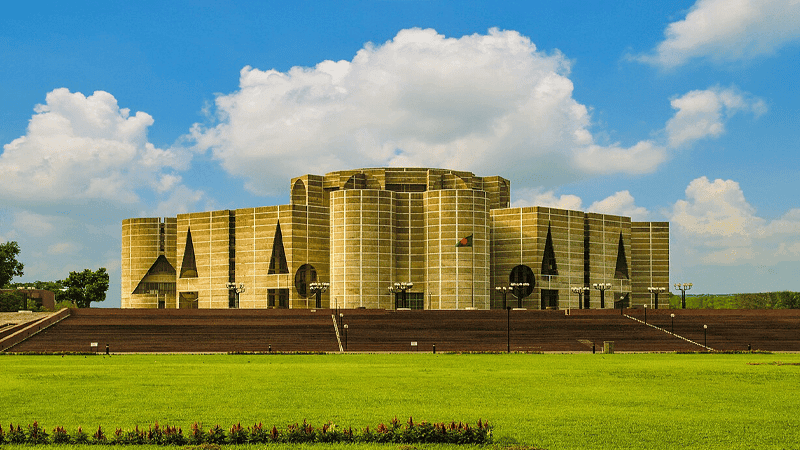

The first session of the 13th National Parliament will convene on March 12. A question has become the centre of curiosity in political circles surrounding this session, who will preside over the first day's proceedings?
According to the constitution, the President must summon the first session within 30 days of the gazette publication of general election results. Following that obligation, the session has been scheduled for March 12.
Home Minister Salahuddin Ahmed informed that the National Parliament Secretariat's summary will go to the President through the Prime Minister's Office, and the President will summon the session on the Prime Minister's advice.
On the first day of the session, the new Speaker and Deputy Speaker will be elected. Additionally, members of the five-member panel of chairmen will be nominated, condolence motions will be moved, and ordinances promulgated during the interim government will be presented.
However, complications have arisen regarding who will preside over the session's commencement. The outgoing twelfth parliament's Speaker has resigned, and the Deputy Speaker is in jail, rendering them unable to perform duties. Although the constitution stipulates that the first meeting of the new parliament should begin under the Speaker or Deputy Speaker's chairmanship, this is not possible in the current situation.
According to the Rules of Procedure of the National Parliament, any member nominated by the President can preside over the session.
There is precedent from 1973 when, after the first parliamentary election, a senior member was given presiding duties based on discussions between the ruling and opposition parties. Parliament sources indicate that this time too, a senior MP elected multiple times may be tasked with commencing the session.
On this matter, Salahuddin Ahmed said decisions will be made following the constitution, rules of procedure and conventions in the absence of the Speaker and Deputy Speaker.
Meanwhile, colleagues of opposition leader and Bangladesh Jamaat-e-Islami Ameer Shafiqur Rahman have indicated there is precedent for a senior member to preside on the first day. The opposition will fully cooperate if the ruling party takes initiative.
According to constitutional provisions, President Md Sahabuddin will address the inaugural session. The speech will be approved by the cabinet as per rules. The session will be adjourned immediately after the address. Later, lengthy discussions will be held on a motion of thanks, with participation from the government, opposition and independent members.
After the Speaker's election on the first day, the session will be adjourned for 20 minutes for the new Speaker's oath-taking. The President will administer the oath. Subsequently, the Deputy Speaker election and other proceedings will be conducted under the new Speaker's chairmanship.
Experts believe there is no provision in the constitution regarding who will conduct the first session in the absence of a Speaker and Deputy Speaker. However, according to the Rules of Procedure, the President can nominate someone to conduct the first session. Alternatively, to avoid constitutional vacuum, the President may seek advice from the Supreme Court under Article 106 of the constitution. Thus, in the session summoned before March 15, a person nominated by the President may be tasked with conducting the parliamentary session.
It may be noted that results from 297 seats were published in the February 12 election. BNP formed the government by winning 209 seats. Jamaat secured 68 seats. Additionally, several parties including National Citizen Party (NCP) and Bangladesh Khilafat Majlish are represented.
Leave A Comment
You need login first to leave a comment