
Qawmi madrasa education board issues directive banning corporal punishment
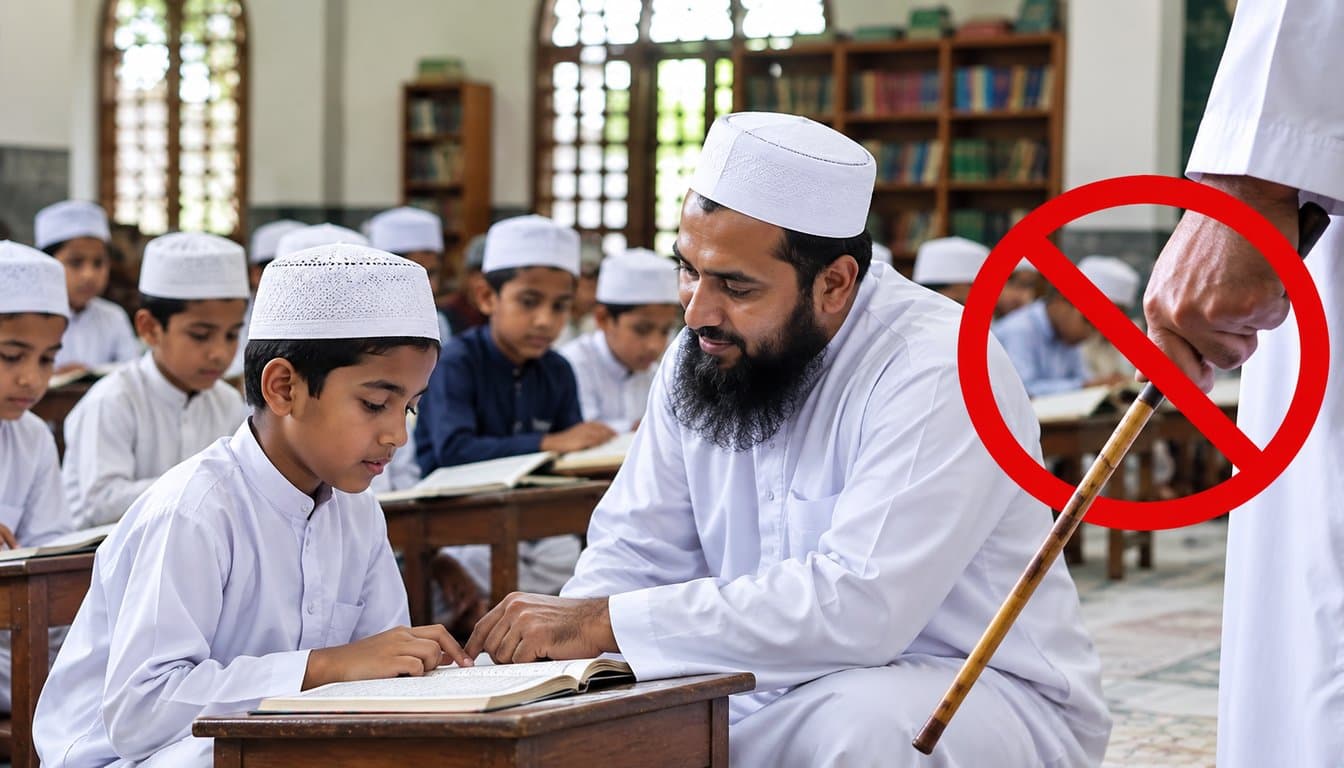

Al-Haiatul Ulya Lil-Jamiatil Qawmia Bangladesh, the highest education board for Qawmi madrasas, has declared corporal punishment of students completely banned. At the same time, the country's six Qawmi madrasa boards under it and all madrasas affiliated with them have been directed to immediately form and activate student protection committees.
In the directive issued on Saturday, September 19, on the instructions of Al-Haiatul Ulya Chairman Allama Mahmudul Hasan, specific guidelines were given on strengthening reform and training activities and on what to do to prevent anti-madrasa propaganda. It was stated that the directive was issued in the context of recent news and allegations published in various national media and social media regarding student torture in Qawmi madrasas and the immoral activities of certain individuals.
The directive stated that the sole purpose of discipline should be the correction and welfare of the student, never revenge, and no one should be punished in a state of anger. A step-by-step rule for discipline has been laid down, where initially there is room for gentle warning, if necessary mild rebuke and then anger and scolding, but in absolutely essential situations, as a last step, the guardian should be called and informed in writing and necessary measures taken with the guardian. It was clearly stated that students must not be beaten as punishment under any circumstances.
The directive stated that hitting with a stick, cane or any other instrument, hitting the face, head or sensitive organs, and any form of punishment causing broken bones, bleeding or marks have been completely banned. Alongside this, public humiliation, abuse, rebuke, using harsh language or hateful nicknames, and any other mentally abusive behaviour have also been identified as things to be avoided. It was stated that teachers who violate the directive will be brought under accountability from the perspective of both Shariah and conventional rules.
Al-Haiatul Ulya made its position clear in this directive, stating that it is their policy to ensure proper investigation and legal trial if any person is actually involved in a crime or immoral act, and not to give any indulgence to the offender.
At the same time, Al-Haiatul Ulya noted that it is not reasonable to question the entire Qawmi madrasa education system, millions of students and the teaching community based on a few isolated incidents, and to shift the responsibility for an individual's crime onto the madrasa, board or the overall community of scholars and students.
It was stated that this directive was formulated based on decisions taken at the 69th meeting of the Al-Haiatul Ulya Standing Committee held on September 12 under the chairmanship of Al-Haiatul Ulya Chairman Allama Mahmudul Hasan, and at a meeting of the relevant subcommittee held earlier on July 29. It was mentioned that the writings of Deoband scholars, including Hakeemul Ummat Maulana Ashraf Ali Thanvi and Shaikhul Hadith Maulana Muhammad Zakariya Kandhlavi, on education and training, and the fatwas of renowned religious institutions, were followed in preparing the directive.
In the directive to immediately activate the student protection committees, it was stated that this committee must be formed or reconstituted in every madrasa and kept active, and the opportunity must be ensured for students, teachers or employees to submit any complaint of misconduct, torture or harassment to the committee. The committee must complete the investigation and submit a report within seven days, and in cases of serious allegations, the accused must be temporarily suspended from duty during the investigation. It was warned that if it is proven that this committee does not exist in any madrasa, remains inactive, or fails to take action even after receiving a complaint, it will be considered a reason for suspending or cancelling the affiliation of the concerned madrasa.
Alongside setting limits on discipline, the directive ordered organising regular reform meetings for teachers and students in every madrasa, making training meetings mandatory for newly appointed teachers, and increasing the arrangement of guardian gatherings, so that communication and trust with guardians are strengthened and any problem quickly comes to the attention of the madrasa authorities.
Leave A Comment