
Resolving power and gas crisis will take at least two years: Finance Minister
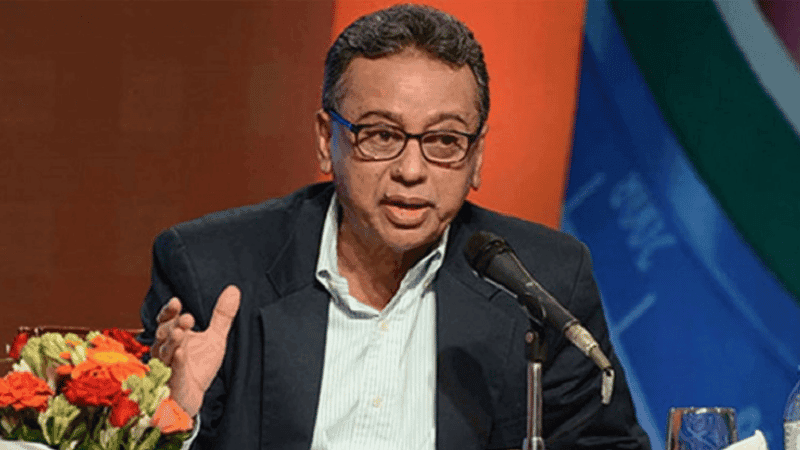

Finance and Planning Minister Amir Khosru Mahmud Chowdhury has stated that the country's electricity and gas crisis cannot be resolved within four to six months or even a year, estimating that it will take at least two years to overcome the shortage.
He made these remarks while addressing an event as the chief guest, organized by the American Chamber of Commerce in Bangladesh (AmCham) at Hotel InterContinental in Dhaka on Sunday (August 16).
Speaking at the meeting, the Finance Minister reiterated that the crisis cannot be solved in six months or a year, emphasizing the two-year timeframe needed for a full resolution.
Amir Khosru noted that the current electricity and gas shortage is an inherited problem from the previous government, though he assured that the administration is working to resolve the issue as quickly as possible.
He shared that plans for constructing floating LNG terminals and onshore gas storage facilities are in their final stages, with detailed announcements expected within the next few days.
Addressing the power situation, the Minister stated that while the country possesses adequate electricity generation capacity, transmission systems have currently emerged as a major challenge.
He mentioned that the government is finalizing the nation's power and energy mix, which will incorporate renewable energy, gas-based power, and coal-fired electricity generation.
Amir Khosru said the government is moving forward with an integrated energy mix policy and expressed optimism that major transformations in the power and energy sector will be visible in due course.
Turning to revenue sector reforms during the event, the Finance Minister announced plans to transfer the responsibility of formulating tax policies from bureaucrats to a group composed of specialists.
He stated that the National Board of Revenue (NBR) will be divided into two parts to separate tax policy formulation from policy implementation, ensuring the policymaking body is expert-driven rather than bureaucratic.
The government is also advancing toward complete automation of the tax system, which will allow services such as tax return submission and refunds to be conducted online on a real-time basis.
Amir Khosru added that a task force has been formed to monitor the implementation of the government's deregulation initiatives, tracking related progress on a daily basis.
The task force will oversee whether relevant government agencies are properly executing announced deregulation steps, and a website is currently under development to allow business owners and citizens to lodge complaints if any agency fails to enforce directives, he noted.
The Minister acknowledged that implementing these reforms will require amending certain laws, and work on this front has already begun.
Recalling his recent budget speech, Amir Khosru mentioned that a significant portion was dedicated to deregulation, reflecting the government's firm commitment to reducing administrative and policy barriers to business.
While admitting that implementing deregulation will be difficult due to longstanding complex administrative rules and systems, the Finance Minister affirmed that the government remains 100% committed to executing these reforms.
Leave A Comment