

SC control over lower judiciary: Full text of HC verdict released
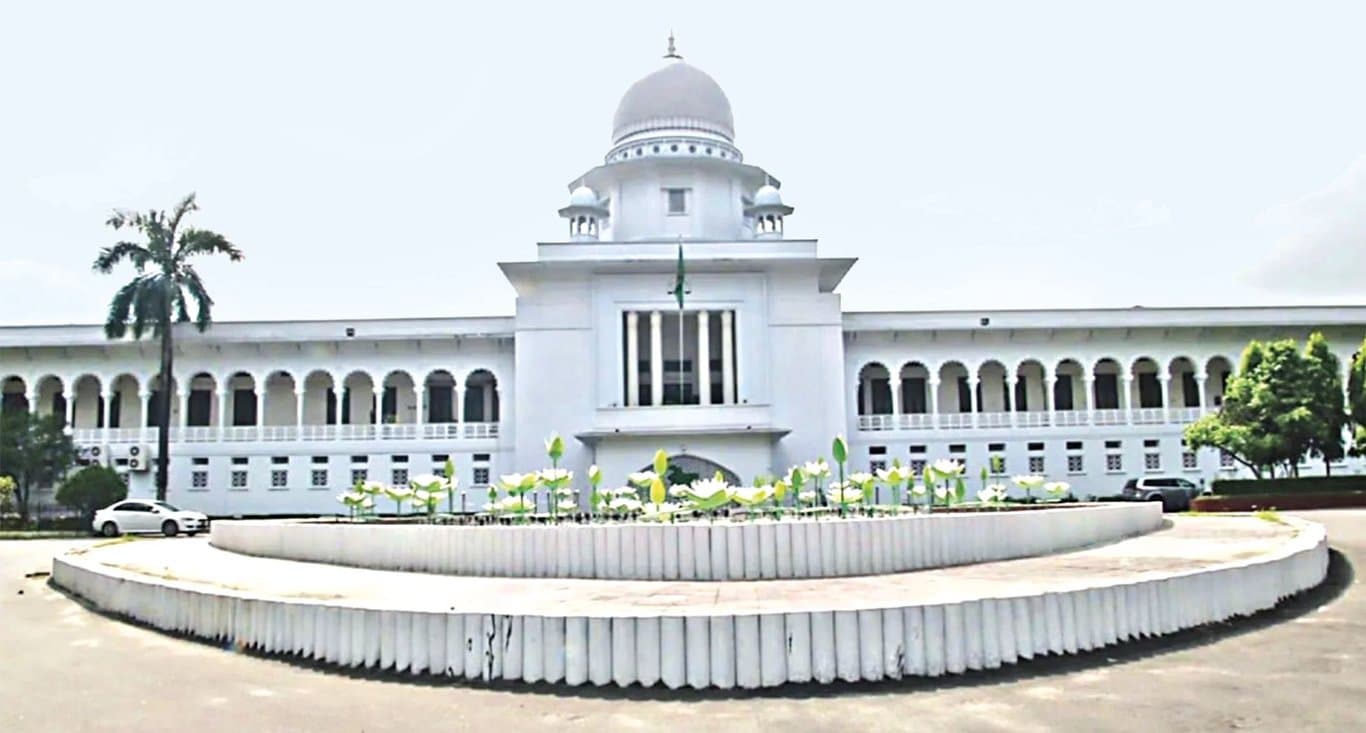

The full verdict of the High Court, ordering the formation of a separate and independent secretariat for the Supreme Court within three months, has been released. The 185-page verdict was published on Tuesday (April 7).
Earlier on Spetember 2 last year, the bench of Justice Ahmed Sohel and Justice Debasish Roy Chowdhury delivered the landmark verdict, striking down important constitutional amendments and executive rules that had for long kept the judiciary under the executive.
The verdict was delivered after hearing a public interest litigation filed by lawyer Md Saddam Hossen and eight other Supreme Court lawyers after the August 5, 2024 ouster of the Sheikh Hasina-led Awami League regime amid a mass uprising.
‘The respondents are directed to establish an independent secretariat for the Supreme Court of Bangladesh as proposed by the Supreme Court authorities, preferably within three months,’ the court ruled, citing the existing lack of institutional autonomy as a violation of Articles 28 and 29 of the constitution, which guarantee equality and non-discrimination.Diaspora community news
The court declared unconstitutional both the 4th amendment (1975) and the 15th amendment (2011) that altered Article 116, shifting control over lower court judges’ discipline and administration from the Supreme Court to the president.
The bench held that these changes violated the principle of separation of powers.
‘As the existing Article 116 has been declared ultra vires, the original version of Article 116 of the 1972 Constitution is hereby restored,’ the verdict said.
The original Article 116 that now stands reinstated states, ‘The control (including the power of posting, promotion, and grant of leave) and discipline of persons employed in the judicial service and magistrates exercising judicial functions shall vest in the Supreme Court.’
The court also struck down the Bangladesh Judicial Service (Disciplinary) Rules, 2017, declaring them inconsistent with both the restored Article 116 and the precedent set in the Masdar Hossain case, which mandated a separate and independent judicial structure.
The court found that the current Article 116, under which the president exercises control ‘in consultation with the Supreme Court’, has created a ‘dual administrative structure’, allowing the law ministry to retain final authority in judicial matters. This, the court said, effectively subjugated the judiciary to the executive.
The court also granted a certificate allowing a direct appeal to the Appellate Division, saying the case involves important constitutional questions.
Article 116 of the 1972 constitution empowered the Supreme Court to control and discipline the subordinate courts and the judges and magistrates employed there.
The Supreme Court lost its authority to control the lower courts and judges as the president was empowered only to do this job by amending Article 116 through fourth amendment to the Constitution in 1975.
In 1975, the government also incorporated a new Article 116 A in the constitution stating that the lower court judges would be ‘independent in the exercise of their functions subject to provisions of the Constitution’.
Article 116 was amended again through the fifth Amendment to the constitution during the martial law proclamation in 1978, stating that the president will exercise the powers over the lower judiciary ‘in consultation with the Supreme Court’.
The 1978 amendment to Article 116 was declared illegal following a Supreme Court verdict that had declared the fifth amendment unconstitutional.
On June 30, 2011, the government enacted the 15th amendment to the constitution, paying no heed to an observation of the Supreme Court given in its verdict on the fifth amendment for the reinstatement of original Articles – Article 115 and 116.
Leave A Comment
You need login first to leave a comment