

TIB has failed to see real reform initiatives: Finance Adviser
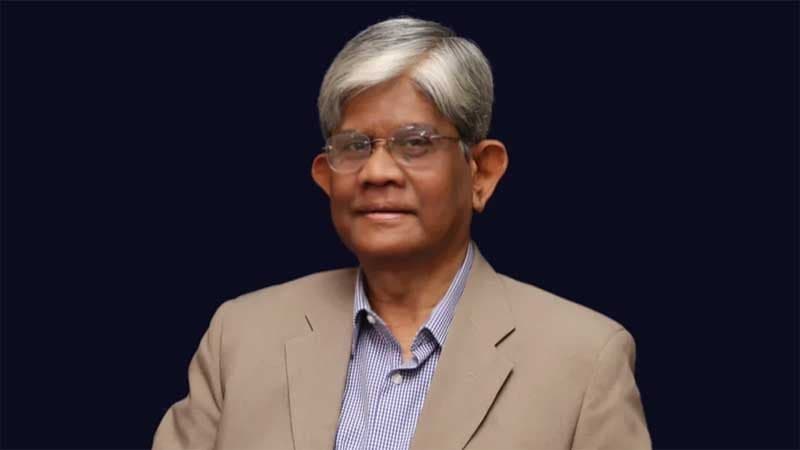

Finance adviser Dr Salehuddin Ahmed has said that Transparency International Bangladesh, TIB, has failed to recognise many aspects of the interim government’s real reform initiatives.
“TIB people cannot see everything. They do not have divine vision, not even good vision. Even if they want to see, many things escape their eyes,” he said.
He made the remarks on Tuesday while responding to journalists after a meeting of the advisory committee on government procurement at the Secretariat.
Earlier, TIB had claimed that the level of visible reform spoken about by the government was not reflected in reality. In response, the finance adviser said TIB mainly focuses on laws and regulations, while the government has simplified many processes, which TIB is not considering.
As an example, he said approval procedures for overseas wage-earner projects were previously complicated but have now been simplified. “Not everything has been automated, but many processes have been made easier. Why are they not seeing this?” he asked.
When a journalist noted that he had previously praised TIB but that those in power often view it critically, Salehuddin Ahmed said he was still not defaming TIB. However, he stressed the need to focus on fundamental issues.
He said that if someone chooses not to see, many things can be ignored. Citing himself, he said he had never engaged in unnecessary criticism from outside and had always spoken about core issues.
Referring to TIB executive director Iftekharuzzaman’s role as a member of the reform commission, the adviser said expectations naturally exist. The government also believed reforms could be implemented step by step, but cooperation from all sides was essential.
He said that after going inside the system, he saw flaws in processes beyond imagination. Despite this, he claimed to have completed significant work at the finance ministry, adding that officials, including the finance secretary, were working swiftly. He also remarked that frustration existed among several other advisers.
Salehuddin Ahmed said he came from the civil service and was trained in how things should be done, but not everyone shared that experience, making work difficult without cooperation.
Responding to a question on bureaucratic problems, he said there was certainly a bureaucratic component, alongside poorly drafted laws. He cited banking regulations, noting that where two or three family members had once been allowed as directors, the number was later increased to six, calling it a backward step.
Asked about the state of the economy after his one-and-a-half-year tenure, he said the economy was now in a satisfactory condition and the next government would not face major difficulties.
On criticism that the government had taken the highest amount of loans, he said it had also repaid the highest amount, mentioning that six billion dollars had been paid back, the benefits of which future governments would enjoy.
Regarding slower development, he said development had stalled because unnecessary and expensive projects were no longer being taken, citing costly projects like the Karnaphuli tunnel.
On why so much borrowing was still necessary, he said the government had honoured commitments made in previous periods instead of cancelling them.
Addressing rising unemployment, he said job creation remained a major challenge. Small and medium enterprises should have been developed, but adequate funds were unavailable. Bangladesh Bank had tried, but large factories were less labour-intensive, he added.
He concluded by clarifying that by “satisfactory”, he meant stable, saying the economy was no longer as fragile as before and could be taken forward by the next government.
Leave A Comment
You need login first to leave a comment