

Tk8,000 cr revenue shortfall in first 3 months
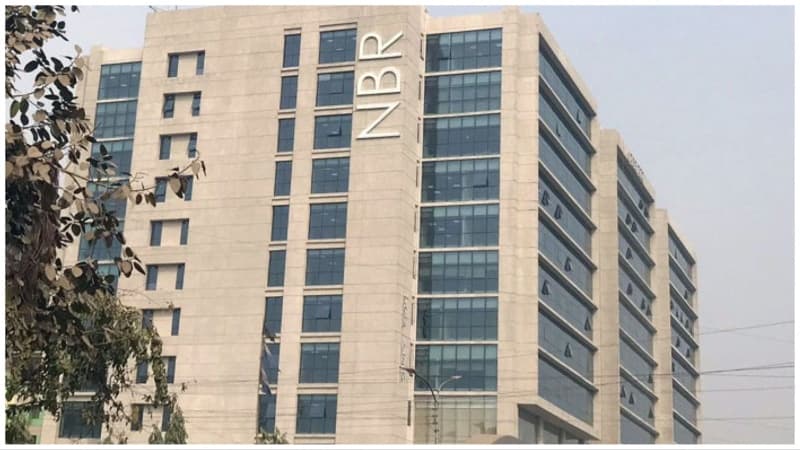

The revenue shortfall continues to persist and is not abating despite adopting various strategies of revenue collection. In the current fiscal year 2023-24, the revenue target and collection deficit are increasing every month. Even in the high tax collection season of July and August, the revenue shortfall has extended into September, exacerbating the revenue deficit. In the first three months (July-September) of the current fiscal year 2023-24, the deficit stood at Tk 8 thousand 196.63 crore, said a source at National Board of Revenue (NBR) .
The source added that the largest portion of the deficit is in the income tax category, where an amount of Tk 3,526.85 crore remains uncollected. On the revenue and expenditure front, the deficit stands at 2,514.10 crore taka. Simultaneously, the shortfall in Value Added Tax (Musak) or VAT stood at Tk 2,154.68 crore.
According to economists, considering the upcoming elections and the global economic situation, there will be a year-long crisis ahead, and achieving revenue targets will be challenging. If there is a big deficit in this sector at the end of the year, it will affect other sectors of the budget. Especially in new industries, investment and production will decrease, business will slow down. As a result, revenue collection will be under pressure.
In the income tax sector, the revenue target for the current financial year has been set at Tk 1 lakh 54 thousand 800 crore. Till September this target was 27 thousand 168 crore taka. However, the revenue collected during this period amounted to Tk 23 thousand 641.15 crore. Till the same time, the target of VAT collection at the local level was Tk 31 thousand 136.93 crore. On the contrary, 28 thousand 982.25 crore taka has been collected. Till the same period, Tk 24 thousand 127.90 crore have been collected against the target of Tk 26 thousand 642 crore in import and export.
Economists blame several factors behind the decline in revenue collection. Among these, imports have decreased due to traditional revenue collection techniques, lack of automation, difficulty in understanding the new income tax law, tightening of import policy due to dollar crisis, rise in dollar exchange rate, inability to open credit cards, increase in commodity prices in the international market and reduced import of luxury goods. Due to this, the amount of duty and tax collection from the import sector has also decreased.
When asked about the matter, Executive Director of the Policy Research Institute (PRI) Ahsan H. Mansoor told Views Bangladesh that there was a dollar crisis even before the beginning of the current financial year. As a result, the government has made an effort to discourage imports since the beginning of the fiscal year. That's why there have been various strictures in opening of LCs, settlements have also decreased. As a result, due to the increase in trade deficits, revenue collection from this category has
also decreased. However, he thinks that NBR had an opportunity to do better in collecting VAT and income tax.
He further said that if the revenue collection is not satisfactory, the government is forced to take internal debt. As a result, the private sector does not get loans that way. He thinks that it is a big obstacle in the progress of the industry.
Asked about the matter, wishing anonymity, several senior officers of NBR told Views Bangladesh that many people are still not able to understand the new income tax law. This issue will be resolved in the future, leading to an increase in revenue collection from this sector. On the other hand, due to the dollar crisis, LC opening rate has decreased, imports have decreased. NBR has no hand in reducing duty collection. However, regardless of how much revenue the NBR has in each fiscal year, the finance ministry sets a target—which they think needs to change.
It is noteworthy that n the current financial year, NBR has set a target of Tk 430,000 crore revenue collection. However, at the time, economists had considered this target to be unusually high. According to them, it is impossible to achieve the target in the current reality. However, NBR officials hope that even if the target is not met by the end of the fiscal year, it is possible to get very close.
Leave A Comment
You need login first to leave a comment