
Upper house of legislature urgent to prevent personal autocracy: Ali Riaz
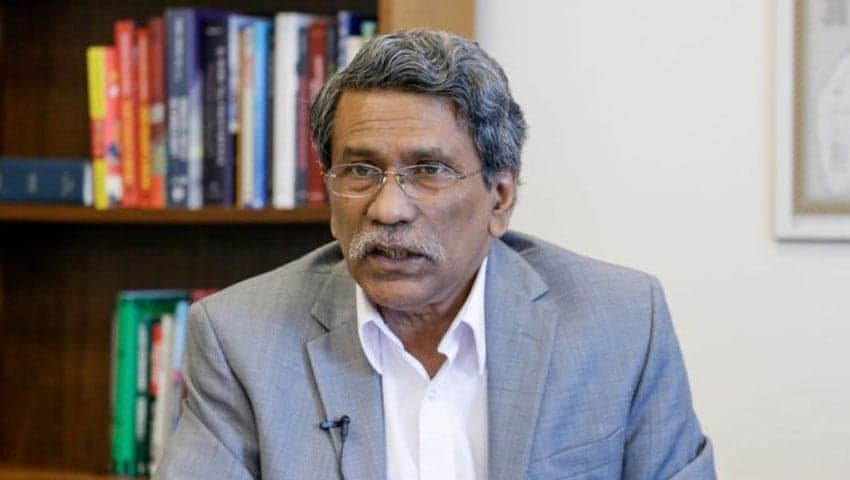

Professor Ali Riaz, Special Assistant to the Chief Adviser, said that a bicameral legislature has been recommended to prevent autocratic power from being concentrated in the hands of any individual in the future.
He stated that under Bangladesh’s current governance system, repeated opportunities due to institutional weaknesses have allowed power to become centralized in a single individual. Overcoming this requires not personal dependence, but the creation of a strong institutional framework.
He made these remarks as the chief guest at a discussion session on promoting the referendum and encouraging voters, held Monday at Dr. Kaisar Rahman Chowdhury Auditorium, Rajshahi Medical College.
Professor Ali Riaz stated that the July Charter includes a proposal to establish an upper house of parliament. Once operational, the upper house will ensure representation not only for the people but for all political parties, and everyone’s opinion will be reflected in important decisions such as constitutional amendments.
He further said that although independence was achieved with the dream of establishing a state based on equality, human dignity, and justice, the desired state could not be built over the past 54 years. Political considerations and the lure of personal power have weakened state institutions. He added that the 1971 mass uprising created an opportunity to break this cycle.
Referring to the upcoming referendum as the foundation for state reform, Ali Riaz, the government’s chief coordinator for the referendum campaign, said that to bring fundamental changes to the state system and provide legal, institutional, and constitutional foundations, there is no alternative to the people’s vote.
In the session, Monir Haider, Special Assistant (Consensus) to the Chief Adviser, said in his remarks that if the referendum fails, there will be a risk of fascism returning in the future. He emphasized that implementing the July Charter is impossible without the people’s consent, and this referendum is crucial to ensure the safety of future generations.
He further stated that there are no restrictions on campaigning for either ‘yes’ or ‘no’ votes in the referendum, as there are no candidates—the referendum reflects a collective agenda. He also noted that opinions of the country’s top legal and constitutional experts have been sought on this matter.
The meeting, chaired by Divisional Commissioner Dr. A. N. M. Bazlur Rashid, was attended by special guests including Professor Dr. SM Abdur Razzak, Vice-Chancellor of Rajshahi University of Engineering & Technology, DIG Mohammad Shahjahan of Rajshahi Range Police, and Dr. Mohammad Zillur Rahman, Commissioner of Rajshahi Metropolitan Police.
Organized by the Rajshahi Divisional Administration, the session was attended by all district commissioners, police superintendents, government officials at district and upazila levels, local journalists, and representatives of civil society from across the division.
In his remarks, Divisional Commissioner Dr. A. N. M. Bazlur Rashid said the country is now standing at a critical juncture. He highlighted the progress of initiatives taken at divisional, district, and upazila levels to raise public awareness about the referendum and urged all relevant officials to carry out their responsibilities with dedication.
Leave A Comment
You need login first to leave a comment