

Why government split NBR into two
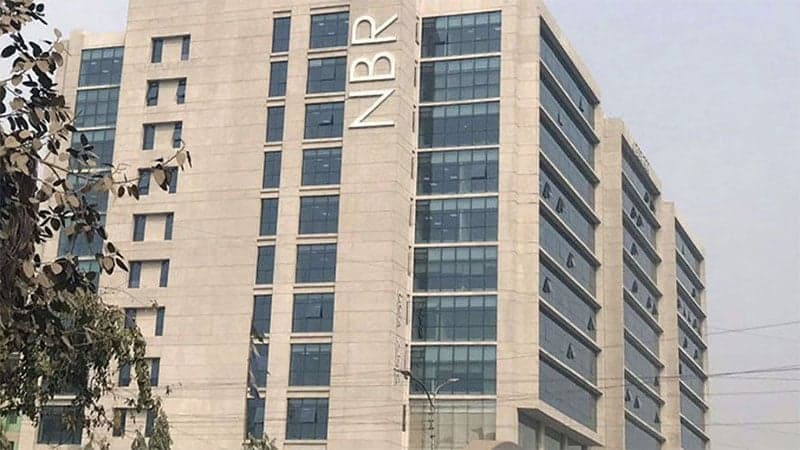

The interim government has announced a major structural reform to abolish the National Board of Revenue (NBR) and form two separate organizations under the Ministry of Finance, namely the Revenue Policy Division and the Revenue Management Division.
Shafiqul Alam, Press Secretary to the Chief Adviser, provided detailed information and data as to why this decision was taken.
Shafiqul Alam said that the main objective of this decision is to separate tax policymaking and tax administration so as to increase efficiency, reduce conflicts of interest and broaden the country's tax base.
He said that the NBR, established for more than fifty years, has never been able to meet its revenue targets. Currently, Bangladesh's tax-GDP ratio is about 7.4 percent, which is among the lowest in Asia. For comparison, the global average is 16.6 percent and Malaysia's ratio is 11.6 percent. It is necessary to increase this ratio to at least 10 percent to meet the country's development goals.
"Structural reforms of the NBR are crucial to achieving this goal. Conflicts of interest and inefficiency arise when one institution is given the responsibility of both policymaking and implementation. This is a well-established view."
Long-standing problems
Conflicts of interest: Since policymaking and tax collection are under the same umbrella, policies have often been weakened and irregularities have become widespread. Currently, there is no effective accountability for those who collect taxes. They often make deals with tax evaders for personal gain. There is no impartial system to measure the performance of tax officials and their promotion or evaluation is not based on performance.
Inefficient revenue collection: Since the same institution is responsible for policy and implementation, attention has been diverted in both areas. As a result, the tax coverage has remained narrow and the revenue collection has not been as expected.
Weak governance: NBR enforcement has been erratic, investment support has been lacking, and the entire system has been riddled with governance flaws. This has reduced investor confidence and weakened the rule of law.
The division of responsibilities was not clear as the head of the Internal Revenue Department is also the head of the NBR. This has hampered the effectiveness of tax policy formulation and implementation.
Demoralization and internal tensions
The reforms have created uncertainty among experienced tax and customs officials. Many fear that they may be neglected.
The reforms
Clear division of responsibilities: The Revenue Policy Department will work on tax law formulation, rate determination and international agreements. The Revenue Management Department will ensure tax collection, audit and compliance. In this way, those who set tax policies will no longer collect them. As a result, opportunities for conflict of interest and corruption will be reduced.
Improvement of efficiency and governance: Each department will be able to focus on its own responsibilities, which will increase institutional efficiency and accountability.
Broadening the tax base and strengthening direct tax collection: This reform will increase tax coverage by employing skilled professionals in direct tax collection and reduce reliance on indirect taxes.
Development-oriented policy: A specialized policymaking department will be able to formulate evidence-based, long-term and development-friendly tax policies.
Increasing investor confidence: Transparent, predictable tax policies and professional administration will make the business environment more attractive.
Finally, Shafiqul Alam said that this reform is not just an administrative reorganization, it is a necessary step to make Bangladesh's tax system more fair, efficient and accountable.
"Improved policymaking and clean tax administration will help fulfill the dreams of every citizen of the country."
NBR Unity Council, a platform of officers and employees from Customs, VAT and Income Tax wings of the National Board of Revenue (NBR), has announced a three-day work abstention beginning tomorrow (Wednesday).
The protest comes in response to the government’s decision to split the NBR, allegedly bypassing the recommendations of the NBR Reform Committee.
Additional Commissioner Sadhan Kumar Kundu announced the programme following a sit-in demonstration held in front of the NBR headquarters on Tuesday.
According to him, the work abstention will take place from 10am to 1pm on Wednesday, 10am to 3pm on Thursday and 10am to 3pm on Saturday.
For the past few weeks, NBR officials have been staging protests demanding that the provision allowing admin cadre officials to be appointed under the new law be scrapped. The law, which splits the NBR into two entities -- Revenue Policy Division and Revenue Management Division-- has become a point of contention.
The government formed the NBR Reform Committee on October 9 last year, comprising former NBR chairmen Muhammad Abdul Mazid and Nasiruddin Ahmed, and former members Delwar Hossain and Aminur Rahman.
The ordinance was published secretly at midnight yesterday (Monday).
Leave A Comment
You need login first to leave a comment