

Views Bangladesh Logo
author image

Engineer M. Hossain

Fellow, Institution of Engineers, Bangladesh (IEB)
30 years of Yasmin tragedy

30 years of Yasmin tragedy

Three decades after Yasmin’s murder, the crisis against which Dinajpur rose up has not disappeared; rather, in some respects, it has returned with an even more frightening face. A particular piece of information from the Bangladesh Mahila Parishad’s “Violence Against Women and Girls: 2025 Survey” is especially heart-wrenching: according to the survey, girls aged six to nine are at the highest risk among child victims of rape. At an age when a child should be holding a doll in her arms, she is instead becoming a victim of brutality. There can be no deeper social shame than this. According to the organisation’s latest figures, in just the first five months of 2026 (January to May), 1,035 women and girls were victims of violence, including 250 rape victims, 65 victims of gang rape, and 18 who were raped and then killed. And these figures represent only incidents reported in newspapers; it is easy to assume that the actual number of unreported and suppressed cases is many times higher.


30 Years of the Yasmin Tragedy

30 Years of the Yasmin Tragedy

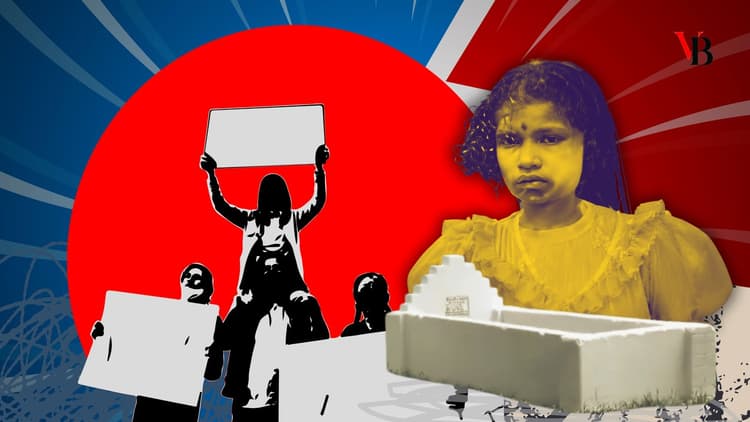
On the dawn of August 24, 1995, the lifeless, bloodied body of a teenage girl lay by the roadside in front of the BRAC office at Raniganj intersection in Dinajpur town. Her name was Yasmin Akter. According to Bangladesh Mahila Parishad and most reliable accounts, she was only 14 years old. At an age when a girl should have been carrying schoolbooks, Yasmin’s lifeless body lay on a city street in the early morning light. She had been working as a domestic helper in a Dhaka household and was travelling by bus to return to her mother in Dinajpur.

Politics of hilsa: Rumours, silence and reality

Politics of hilsa: Rumours, silence and reality

In October 2025, just before Durga Puja, the price of a one-kilogram hilsa rose to around Tk2,900 at Dhaka’s Karwan Bazar. Yet the fisherman who spends night after night casting his net in the Meghna estuary often cannot afford to put even a piece of hilsa on his own children’s plates for months on end.