Article
Pahela Baishakh: Dialectical formation of Bengali identity
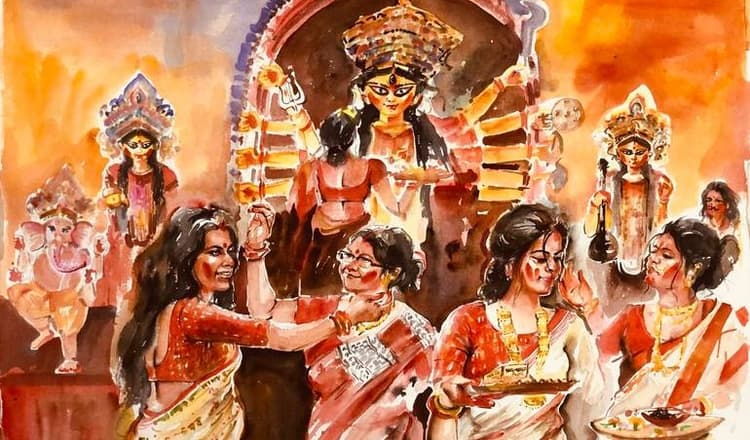
When individuals participate in a procession, carrying clay dolls or softly singing, "Eso, he boishakh, eso eso..." (inviting the summer), a pertinent question arises: is this celebration a festival of the Bengali people, or is it an imposition of Hindu culture upon the 'Muslims'? The latter assertion is quite significant. This inquiry is fundamentally altered with the onset of Baishakh. Its core lies in the comprehension of identity, culture, religion, and history. Pahela Boishakh stands as the most prominent socio-cultural festival in Bangladesh. This festival, which is rooted in the illusion of capitalism, is now celebrated in every household of the proletariat within the freedom of society. It has been intertwined with the cultural elements generated by the social order of transformation. This amalgamation is now irreversible. Even the philosophies of Marx or Hegel would falter in this context. Nevertheless, the discourse surrounding this festival persists. The crux of the debate: it is regarded as the timeless cultural manifestation of Bengalis, while conversely, it is viewed as a contemporary political construct, with a specific religious group rejecting and opposing it as an encroachment of foreign culture. It is impossible for all members of the nation to be entirely acquainted with one another. However, despite our differences, our journey and struggles are unified. Just as we feel joy when a Bengali receives an accolade thousands of miles away, we also experience sorrow when a Bengali perishes in a conflict in the Middle East. What accounts for this phenomenon? We have cultivated certain humanly conceived entities within ourselves, which fosters our attraction to one another.